
Healthcare industry, managing finances is just as important as delivering quality patient care. Many clinics and medical practices struggle not because they lack patients, but because their billing and reimbursement process is not properly managed. This is where Revenue Cycle Management (RCM) becomes essential. It ensures that every medical service provided is accurately documented, billed, and reimbursed without delays or revenue loss.
What is Revenue Cycle Management?
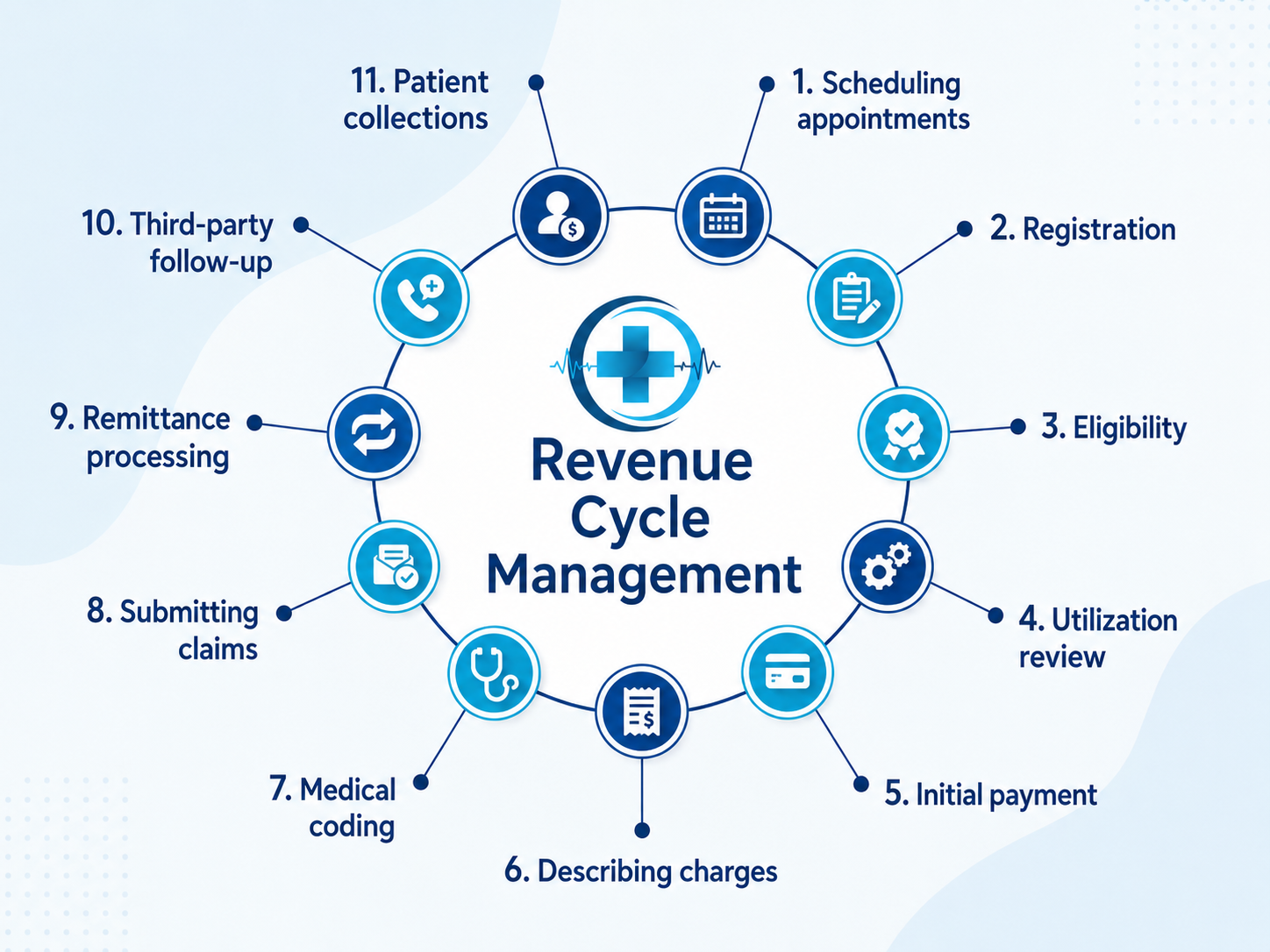
Revenue Cycle Management (RCM) is the complete financial process used by healthcare providers to track patient care revenue from start to finish. It begins when a patient schedules an appointment and ends when the final payment is received from insurance companies or patients.
This process includes:
Patient registration
Insurance verification
Medical coding and billing
Claim submission
Payment posting
Denial management and follow-ups
A properly managed RCM system ensures that healthcare providers maintain a steady cash flow while reducing administrative burdens.
This process includes:
Patient registration
Insurance verification
Medical coding and billing
Claim submission
Payment posting
Denial management and follow-ups
A properly managed RCM system ensures that healthcare providers maintain a steady cash flow while reducing administrative burdens.
Why Revenue Cycle Management is Important
One of the biggest challenges in healthcare billing is claim denial. Even small errors in coding or insurance details can lead to rejected claims, delayed payments, and financial stress for clinics.
RCM helps reduce these issues by:
Improving billing accuracy
Ensuring compliance with insurance rules
Reducing claim denials
Speeding up reimbursements
Increasing overall revenue efficiency
When the revenue cycle is well-managed, healthcare providers can focus more on patient care instead of administrative issues.
RCM helps reduce these issues by:
Improving billing accuracy
Ensuring compliance with insurance rules
Reducing claim denials
Speeding up reimbursements
Increasing overall revenue efficiency
When the revenue cycle is well-managed, healthcare providers can focus more on patient care instead of administrative issues.
How Zion Physicians Solutions Helps
Managing RCM in-house can be time-consuming and complex. Many healthcare providers choose to work with experts to handle this process efficiently.
Zion Physicians Solutions provides professional Revenue Cycle Management services designed to help clinics and healthcare organizations improve their financial performance. Their team manages everything from billing and coding to claim follow-ups, ensuring faster reimbursements and reduced claim denials.
Zion Physicians Solutions provides professional Revenue Cycle Management services designed to help clinics and healthcare organizations improve their financial performance. Their team manages everything from billing and coding to claim follow-ups, ensuring faster reimbursements and reduced claim denials.
Role of Technology in RCM
Modern Revenue Cycle Management heavily relies on technology. Electronic Health Records (EHR), automation tools, and data analytics help reduce manual errors and speed up claim processing. These tools also allow healthcare providers to track revenue performance in real-time and identify issues quickly.
Conclusion
Revenue Cycle Management is the backbone of financial stability in the healthcare industry. Without a proper RCM system, even well-established clinics can face revenue loss and operational challenges. By improving accuracy, reducing claim denials, and streamlining billing processes, RCM ensures smooth financial operations. Partnering with experts like Zion Physicians Solutions can help healthcare providers maximize revenue and focus on what matters most—patient care.
FAQs!
Revenue Cycle Management is the process of managing all financial activities in healthcare, from patient registration to final payment collection.
Healthcare providers need RCM to ensure accurate billing, reduce claim denials, and maintain a steady cash flow.
The main steps include patient registration, insurance verification, coding, claim submission, payment posting, and denial management.